Ground-Mount vs Rooftop Solar: Which Racking Gives Better ROI?
September 30, 2026
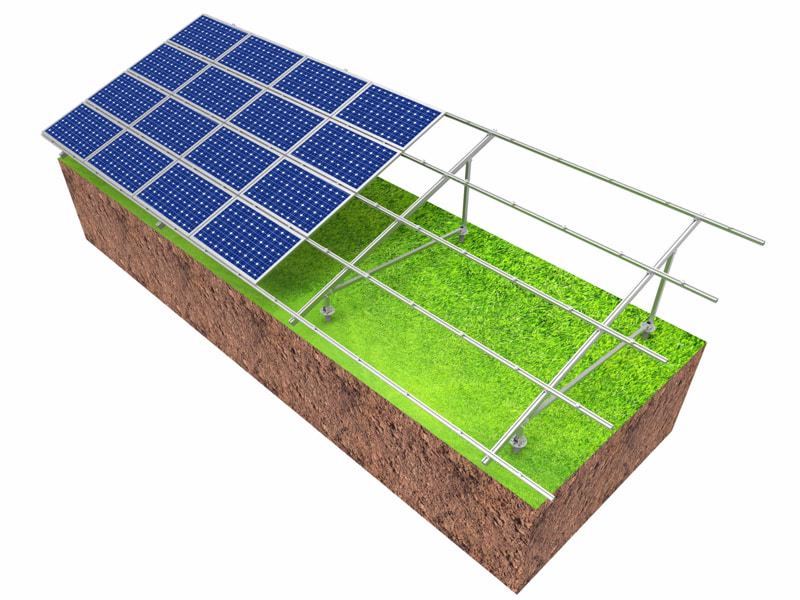
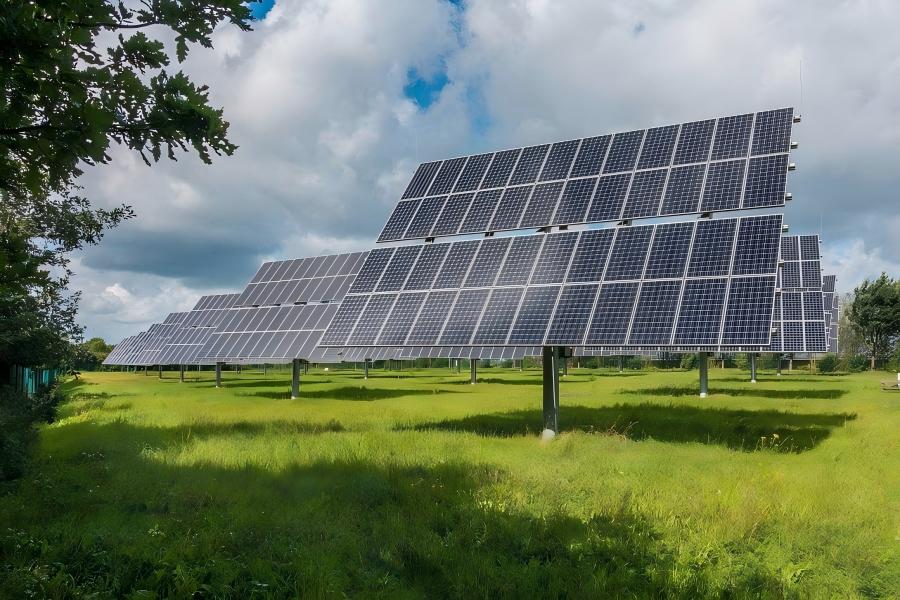
Ground-Mount vs Rooftop Solar: Which Racking Gives Better ROI?Putting a solar array on a warehouse roof feels obvious—the space is already there, paid for, and connected to the building it serves. But when the engineering team runs the numbers, a ground-mounted system three hundred meters away often wins the capital allocation meeting. The choice between ground-mount and rooftop racking doesn’t hinge on personal preference. It turns on hard, site-specific variables: available land, structural load capacity, tilt latitude, soil corrosion class, and the cost of trenching cable that may eventually tie into a Hybrid Inverter cabinet in the plant room.Project developers who have managed a dozen installations across Southeast Asia and Europe know this truth: the racking system is rarely the biggest line item, but it drives every downstream operational number. A rack that forces a sub-optimal tilt knocks 3–8% off the annual yield forever. One that requires penetrations through a 15-year-old TPO membrane adds ongoing waterproofing liability. None of those costs show up in the module price per watt, yet they swamp the financial model by year five.The following comparison is built from field engineering experience, published industry cost benchmarks, and structural standards such as EN 1991 and ASCE 7. It treats both racking approaches as integrated parts of a balance-of-system supply chain—exactly the lens C&D Clean Energy applies when sourcing aluminum extrusions, galvanized steel posts, and torque-tube assemblies for customers across its global PV network.What Actually Drives Racking ROIToo many comparison spreadsheets stop at the racking bill-of-materials cost. That is like judging a crane by its paint job. A proper ROI calculation for the mounting structure must include at least five layers:Structural lifespan versus warranty period. A hot-dip galvanized steel post in C4 coastal soil may last 25 years; the same post in C2 inland clay might reach 35. Matching the corrosion protection to the site’s ISO 9223 classification can avoid substructure replacement that wipes out the return.Yield uplift from angle optimization. Fixed-tilt ground mounts routinely outperform flat-roof ballasted systems by 10–20% in annual specific yield (kWh/kWp) when latitude-matched, a figure corroborated by PVsyst simulations across multiple climate zones. Flat commercial roofs locked at 3–5° drain away photons that a 15–30° tilt catches cleanly.Permitting and geotechnical friction. Rooftop arrays in many jurisdictions skip a full geotechnical survey; ground mounts require soil boring, compaction testing, and pull-out verification per ASTM D3689. That upfront cost—often $3,000–$8,000 for a 1 MW site—must be amortized, but it also lowers foundation risk.Operational access. Cleaning robots, string-level monitoring, and rapid shutdown boxes need pathways. A ground array with drive-row spacing of 4–6 m lets a pickup truck slide between rows. An industrial rooftop with parapets and HVAC units forces crews to carry water and tools across a membrane that costs $25/m² to repair.Inverter compatibility. Long DC runs from a distant ground array often tip the design toward a central inverter station, while a compact rooftop regularly pairs with a Off-grid Inverter or a multi-MPPT string unit placed under the eaves. Voltage drop and cable cost can shift the balance by $0.02–0.04/W.Where Rooftop Racking Makes an Unbeatable ArgumentA rooftop solar mounting system is not one product—it is a family that spans flat-roof ballasted trays, metal-roof seam clamps, and tile hooks for residential pitches. C&D Clean Energy stocks all three categories, and the economics diverge sharply among them.On a 20,000 m² pre-engineered metal building, standing-seam clamps can attach without a single roof penetration. The structural dead load stays below 0.15 kN/m², well within the envelope most PEBs reserve for solar. Because the seam geometry fixes the azimuth, the annual yield penalty is often less than 5% compared to an optimal orientation, and the racking hardware cost can land between $0.08 and $0.12/W in container quantities. When the alternative is spending $15,000 per acre on land plus a year of zoning reviews, the rooftop wins purely on time-to-power.Concrete flat roofs on medium-rise commercial blocks lean on ballasted systems. Typical ballast weight ranges from 12 to 25 kg/m², depending on the wind zone per EN 1991-1-4. Provided the roof’s residual load capacity is confirmed by a structural engineer, those systems can be deployed at 1 MW per week by experienced crews. The international benchmark for such installations, drawn from several IRENA cost studies, puts total racking and labor between $0.12 and $0.18/W for array sizes above 500 kW. That strips out land cost, fencing, and most cable trenching—the three silent partners that dog ground-mount economics.Still, the rooftop’s greatest ROI lever is invisible to the racking supplier: it cannibalizes a facility’s daytime grid consumption exactly when commercial tariffs peak. A factory in Mexico or Malaysia paying $0.12/kWh retail sees a payback period that ground-mount selling at wholesale feed-in rates cannot match unless long-term power purchase agreements (PPAs) are inked at attractive floors.When Ground-Mount Delivers Superior Lifetime MarginsWalk a 50-hectare solar park built on graded cattle pasture, and the financial logic shifts. Ground-mount structures—whether driven piles, concrete ballast blocks, or screw anchors—offer two degrees of freedom that rooftops rarely allow: optimal tilt and precise azimuth. C&D’s own Solar Ground Mounting System is designed around adjustable post brackets that let field teams dial in angles from 0° to 45° without custom tooling, accommodating latitudes from Kunming to Denmark.A fixed-tilt ground array in a site with an annual global horizontal irradiation of 1,800 kWh/m² can deliver a capacity factor near 18–22%, compared to 15–18% for a flat-roof system on the same patch of earth. Over 25 years, that 3–4 percentage-point gap compounds. At a marginal revenue of $40/MWh, each additional percentage point of capacity factor on a 10 MW plant adds around $350,000 of undiscounted revenue. That more than covers the extra steel, concrete, and trenching.Foundations eat the largest single share of ground-mount cost. Driven steel piles in cohesive soil run $0.03–0.06/W; rocky geologies that need pre-drilling or concrete piers can push it to $0.08–0.12/W. The industry rule-of-thumb—ground-mount racking total cost $0.12–0.25/W depending on terrain and wind loading—has held reasonably steady in procurement data tracked by Wood Mackenzie and BloombergNEF since 2021. The spread over commercial rooftop racking can shrink to $0.04/W in favorable soil, and at that delta the extra yield reclaims the premium within four to six years.For utility-scale sites, ground-mount also unlocks bifacial gain. Panels raised 1.2–1.5 m above grade with sparse rear shading capture 8–15% more energy from albedo, verified in field studies by NREL and TÜV Rheinland. Rooftop ballasted systems mounted 0.2 m above a dark membrane see negligible rear-side boost. That is not a racking cost—it is free energy that only ground geometry can capture.Side-by-Side Cost and Performance SnapshotThe tabulation below distills typical ranges seen in competitive tenders across Asia, Europe, and North America. All figures assume large commercial or utility scale (500 kW to 50 MW) and exclude the PV module cost.FactorCommercial Rooftop (Flat/Ballasted)Utility Ground-Mount (Fixed Tilt)Racking hardware cost ($/W)0.08 – 0.150.10 – 0.20Foundation & geotechnical ($/W)0 (included in ballast)0.03 – 0.12Typical specific yield (kWh/kWp/yr)1,100 – 1,5001,300 – 1,750Tilt optimization range3° – 10° (flat roof)15° – 35° (latitude-matched)Bifacial gain potential< 3%8% – 15%O&M annual cost ($/kW/yr)6 – 124 – 10Permitting & survey ($/MW)2,000 – 5,0005,000 – 20,000Typical design life (years)2530 – 35Sources: IRENA Renewable Power Generation Costs 2023, NREL PV system cost benchmarks Q1 2024, author project data.What a Full Supply Chain Lens RevealsComparing racking systems in isolation misses the real decision. A developer does not buy aluminum rails the way a household buys a ladder; they sequence an international supply chain—steel from Vietnam, inverters from China, modules from a Tier-1 factory, all synchronized with in-country erection crews. C&D Clean Energy, as a Global PV Supply Chain Operator under the Fortune 500-ranked C&D Corporation, operates inside that larger picture. It moves containers of ground-mount structures, roof mounting kits, Hybrid Inverter units, and ESS cabinets through bonded logistics, often reducing landed-hardware cost by 6–12% versus fragmented sourcing. At that integration level, the racking choice becomes a logistics and after-sales question as much as a technical one.A utility ground-mount project might also bundle an Off-grid Inverter for a remote pumping station, while the same shipment contains an on-grid string inverter for a rooftop array at an industrial park. Procurement managers who consolidate those categories under one supply chain agreement cut administrative cost, currency exposure, and delivery risk. That frees up engineering bandwidth to focus on where the racking itself can be value-engineered—maybe switching from galvanized to ZAM-coated steel for triple the salt-spray resistance, a technology referenced on the company’s technical blog.Matching the Racking to the Business CaseNot every site gets to choose. A cement plant with 20,000 m² of idle roof and no adjacent land has already made the decision. A solar developer with a long-term lease on 100 hectares of fallow farmland faces the opposite clarity. The difficult cases—and the biggest ROI differential—sit in between.For a cold-storage warehouse in Germany with a 12-year-old TPO roof, the structural capacity may limit ballast weight, pushing the array to a lighter east-west orientation that sacrifices 15% of yield. Placing a ground array on a corner of the property could recover that yield loss, but only if the soil allows cost-effective driven piles and the local grid connection can absorb the extra capacity without a transformer upgrade. A site-specific PVsyst model combined with a geotechnical survey is the only honest way to settle it.When the analysis lands on ground-mount, do not overlook pile corrosion. ISO 9223 classifications are not academic: a C4 environment demands coating thickness above 85 µm for galvanized steel per ISO 1461. A C&I array in heavy de-icing salt territory near the coast of Japan will eat through an 55 µm coating within 15 years. Specifying the right post protection up front adds perhaps $0.005/W and buys an extra decade of revenue. That kind of choice sits in the engineering gray zone where an experienced racking integrator—rather than a commodity trader—adds hard dollar value.If the rooftop is the path, insist on a pull-test regimen for ballasted systems. Wind tunnel data calibrated to ASCE 7-16 or EN 1991-1-4 must match the parapet height and roof roughness of the actual building. A mall in Kuala Lumpur with a 2.5-m parapet behaves aerodynamically very differently from an exposed warehouse in Rotterdam. Under-specifying ballast by 15% can lead to uplift failures during a 10-year storm event; over-specifying by 15% wastes structural budget and may overload the roof. The International Energy Agency’s PVPS Task 15 published a detailed checklist in 2022 that remains a solid reference for these assessments.Choosing the Configuration That Fits Your SiteIf your highest priority is…Choose…Because…Minimizing upfront cash outlayRooftop racking on an existing, load-rated roofEliminates land, fencing, and deep geotechnical cost.Maximizing lifetime kWh per kWpGround-mount fixed tilt at latitude angleHigher capacity factor and bifacial gain add 15–25% total yield over 25 years.Fastest construction to revenueFlat-roof ballasted systemInstallation rates of 1 MW/week cut months off the commissioning schedule.Longest design life with minimal corrosion riskGround-mount on C2-classified soil with ZAM coatingCan exceed 30 years without major refurbishment.Capturing high retail electricity savingsRooftop behind-the-meterOffsets grid imports at the full retail tariff, not the wholesale generation price.Frequently Asked QuestionsDoes ground-mount solar require more maintenance than rooftop solar?Not necessarily. Ground arrays allow easy mechanical access, so module cleaning and vegetation control are simpler. However, ground-mount sites need routine checks of pile corrosion and bolt torque, especially in saline areas, which adds a modest crew cost per visit.How much extra does a ground-mount system cost compared to a rooftop installation?Depending on soil conditions and pile depth, ground-mount racking and foundations typically add $0.04 to $0.12 per watt over a commercial flat-roof ballasted system. However, the yield uplift from optimal tilt often recoups that premium in four to six years.Is rooftop solar always the faster option for permits and construction?Usually, yes. Rooftop projects leverage existing structures and often bypass lengthy land-use approvals. A flat-roof installation on a sound building can be permitted and energized within three to six months, while ground-mount sites regularly take nine to eighteen months due to grading, environmental review, and grid connection studies.Can I use the same inverter for a rooftop and a nearby ground-mount array?Technically yes, if the inverter’s MPPT voltage range and DC input count accommodate both. In practice, mixing roof and ground strings often complicates cable routing and can introduce mismatch losses. Many engineers prefer separate inverter stations for each sub-array, possibly sourcing them as a combined order through an integrated supply chain operator to maintain cost efficiency.What standards govern the structural design of solar racking?Most international projects follow ASCE 7 (United States), EN 1991 (Europe), or AS/NZS 1170 (Australia) for wind and snow loads. Foundation design typically references EN 1997, ASTM D3689 for pile load tests, and ISO 9223 for corrosion classification. It is standard practice to require a third-party geotechnical report before finalizing the racking specification.
查看更多
 Share
Share